

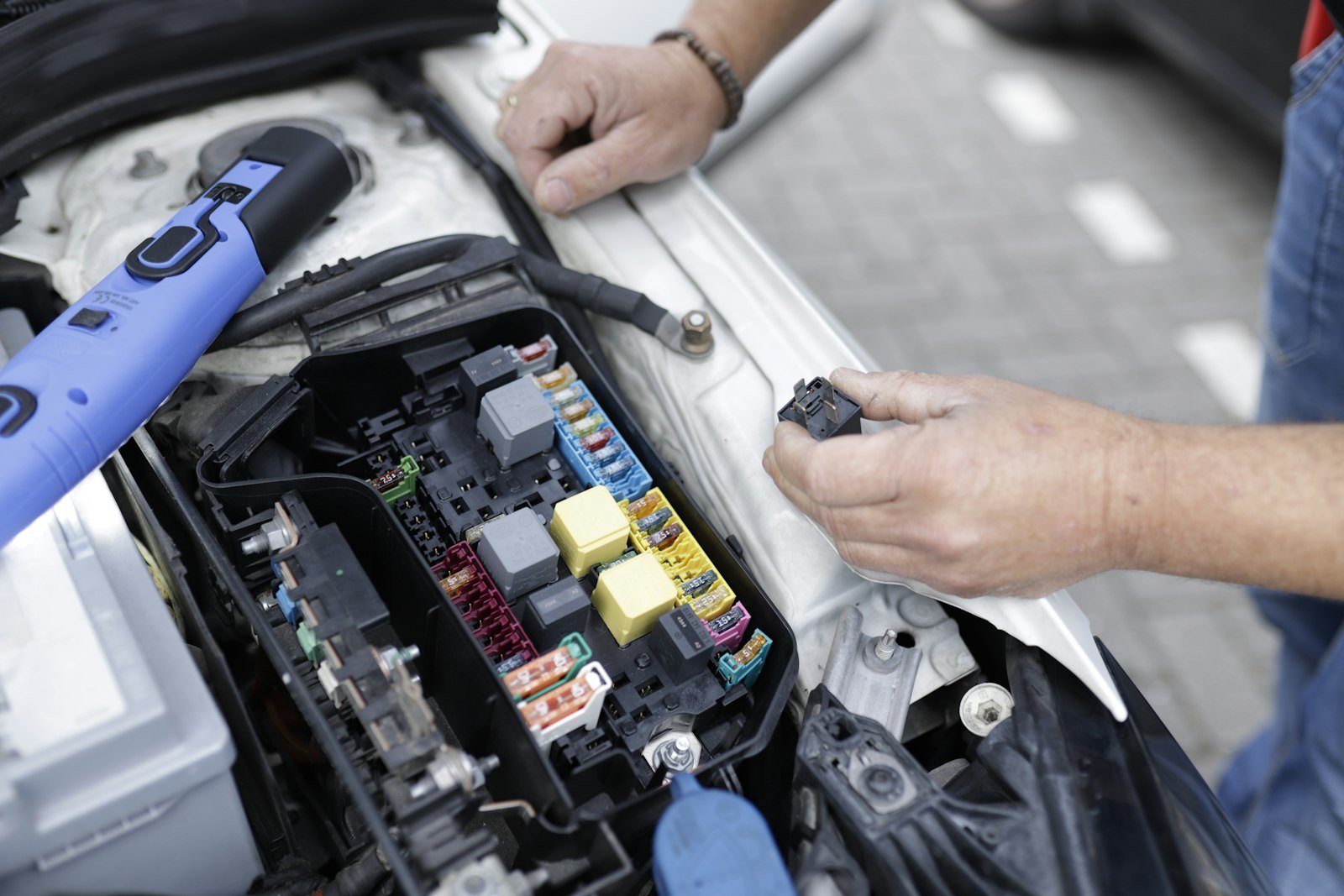
Today’s cars rely on dozens of computers, sensors and screens. A careless jump start can damage them, but done properly it’s perfectly safe.
What can go wrong
Connecting leads in the wrong order, letting the clamps touch, or a voltage spike when the engine starts can damage fuses, sensors or control modules. Repairs can cost far more than the callout.
Use the right connection points
Many modern cars have dedicated jump points under the bonnet, even when the battery is in the boot or under a seat. Your owner’s manual shows where they are, and they’re there to protect the car’s electronics.
Why a jump pack is safer than leads
- Surge protection stops voltage spikes reaching the electronics
- Reverse-polarity protection prevents damage if clamps are swapped
- No second car needs to be parked nose to nose
When not to jump start
The battery is swollen, cracked or leaking, you smell rotten eggs, or the car is a hybrid or EV and you’re unsure which points to use.
Test after every jump
A jump start gets you going, but it doesn’t tell you why the battery went flat. We test the battery and charging system after every jump, so you know whether it will start again tomorrow.
